
Bottom Line Up Front
Operation Epic Fury degraded but did not destroy Iran's Axis of Resistance proxy network. The network's core architecture has proven resilient against leadership attrition, financing disruption, and command decapitation, consistent with its behavior following Soleimani's assassination in 2020. The critical analytical finding is variance: reconstitution capacity is not uniform across nodes. Iraqi proxies sustained the most direct operational attrition but retain deep institutional entrenchment within the Iraqi state. Lebanese Hezbollah is the most combat-degraded major node yet still fields 40,000-50,000 active combatants and was reconstituting faster than the IDF was thwarting as of February. The Houthis are the most intact component, with depleted stockpiles but sufficient residual capability to resume maritime operations. The wartime authorization of autonomous operational authority to field commanders has created a verification problem: even if Tehran agrees to restrain its proxies, no settlement framework can reliably confirm whether that restraint is being enforced at the node level.
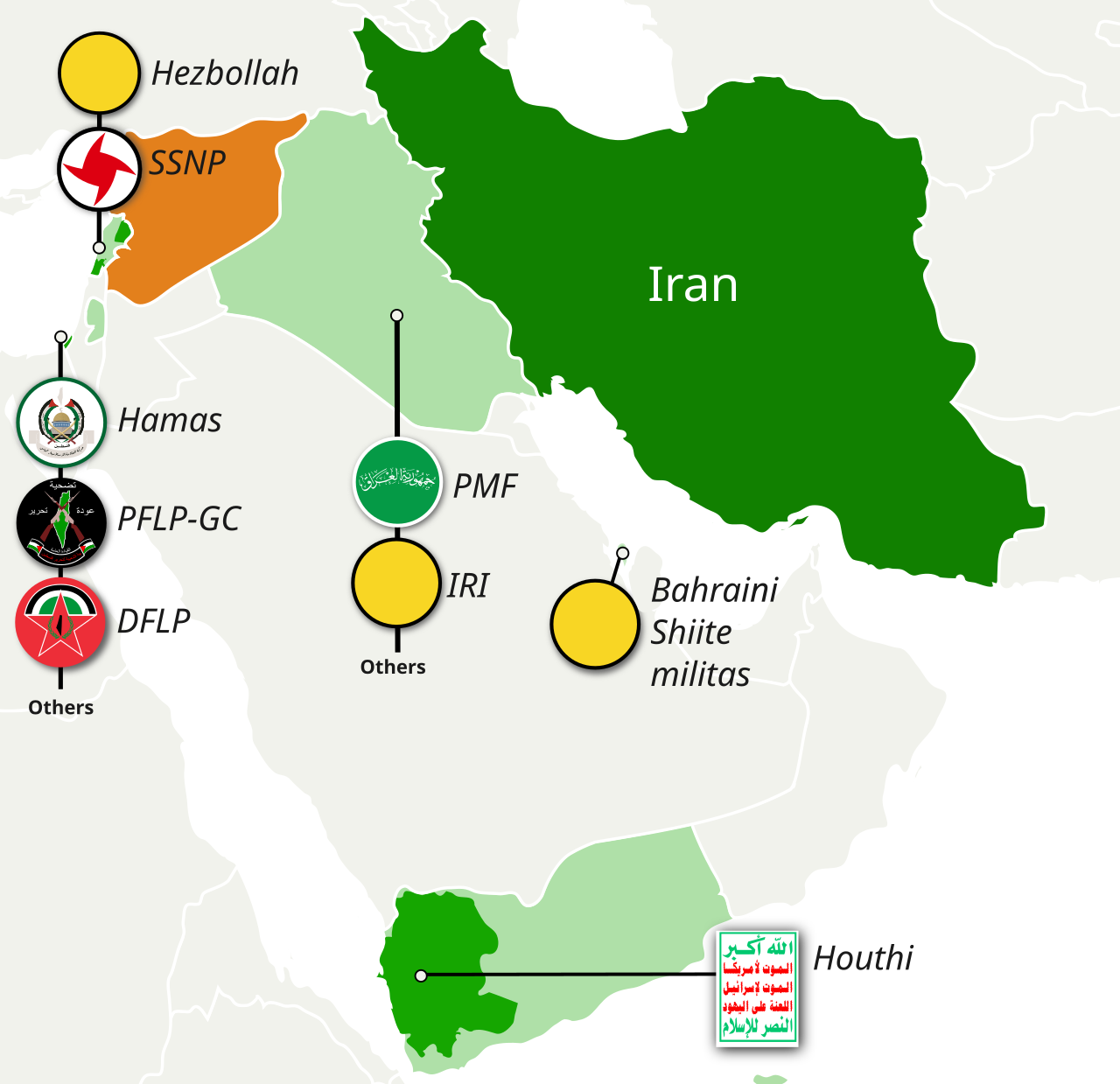
Iraq: The Most Directly Attrited Node
Post-Ceasefire Indicators. The ceasefire has not produced a clean operational pause in Iraq. A team of US diplomats was ambushed by PMF gunmen in Baghdad on 9 April, the day after the ceasefire took effect. Sixteen missile and drone attacks struck Iraqi Kurdistan targeting the exiled Kurdish militant group Komala between mid-April and late April, confirming IRGC and proxy forces remain operationally active. The Coordination Framework authorized Hadi al-Amiri on 5 April to begin truce negotiations with KH and Nujaba leaders. Kittleson's release was confirmed as a prisoner swap in which KH members implicated in attacks on US interests were freed in exchange, demonstrating KH's continued leverage. The US imposed new sanctions in April on commanders of KH, al-Nujaba, Kata'ib Sayyid al-Shuhada, and Asaib Ahl al-Haq.
Structural Entrenchment. KH controls the PMF chief of staff, security, intelligence, missiles, and anti-armor departments. The PMF is a legally constituted Iraqi state institution with 238,000 registered personnel and $3.6 billion in annual Iraqi state budget funding. This is funding that flows regardless of IRGC financial disruption. Approximately 80-90 Iraqi parliamentarians are affiliated with Iran backed armed parties. Iraq's March 2026 PMF reform bill, which would formally subordinate PMF to the Prime Minister's authority. The reform faces substantial militia resistance and is assessed as unlikely to pass in its current form.
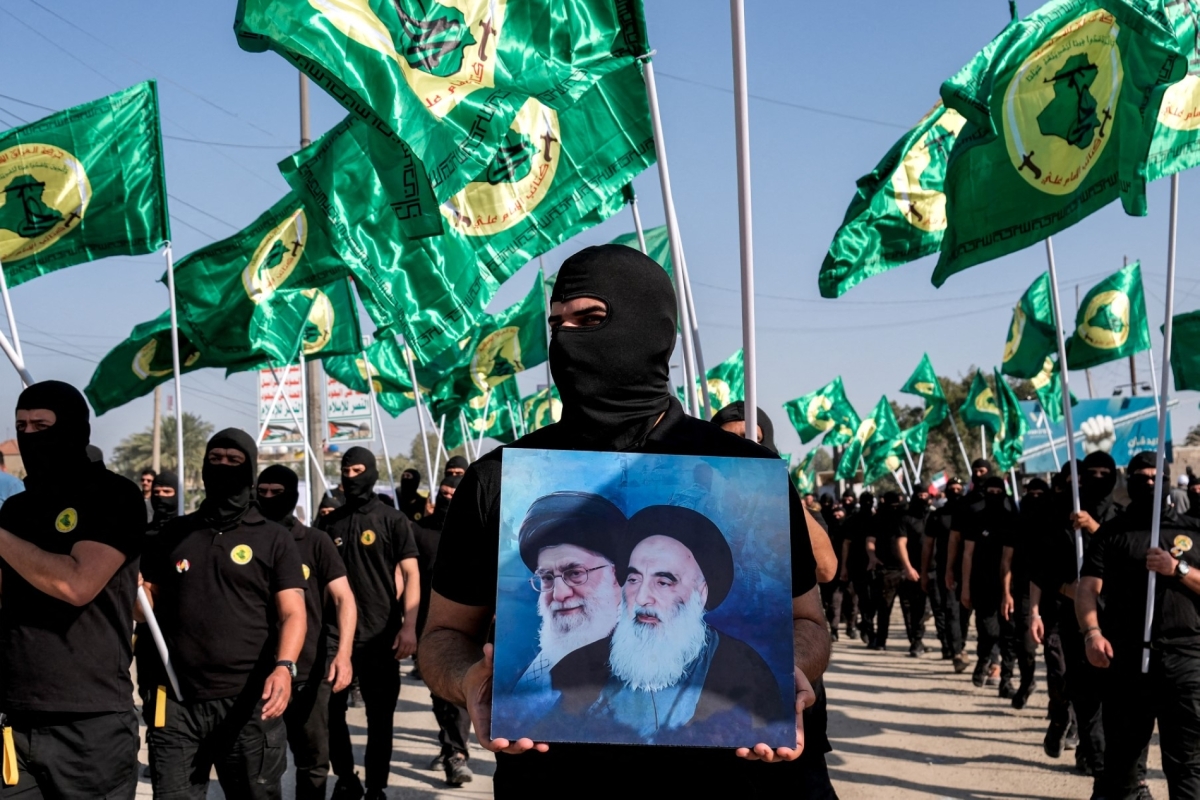
Lebanon: The Most Combat Degraded Nod
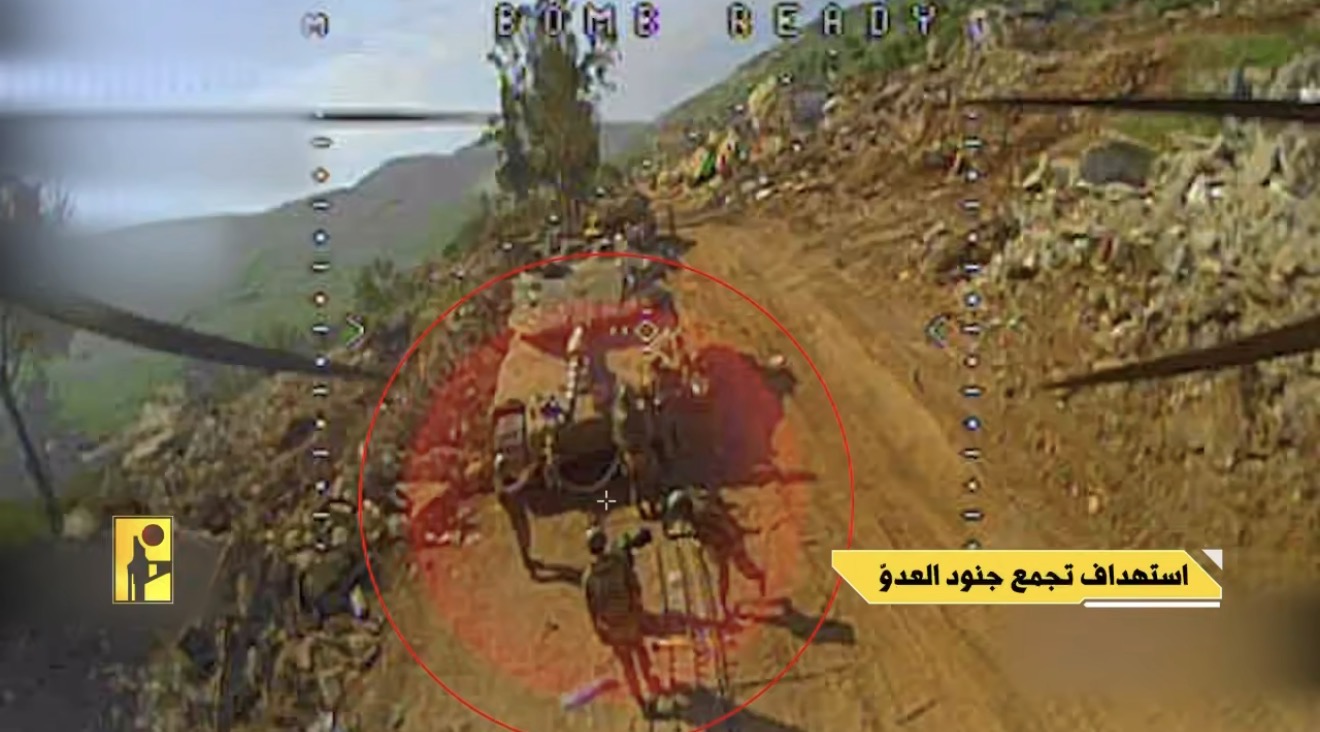
Residual Capability and Active Reconstitution. Hezbollah retains sufficient short-range rocket and anti-tank capability to inflict sustained casualties on IDF ground forces operating in southern Lebanon. This is demonstrated daily during the current ceasefire period through FPV drone attacks on IDF troops and vehicles, with a weapons cache recovered by the IDF on 27 April containing FPV drones, anti-tank explosive devices. IDF satellite imagery has confirmed hundreds of buildings in southern Lebanon converted for weapons storage and fighter staging. Hezbollah's underlying logistics remain partially functional: sea-route resupply is active, partial Syria corridor routes remain open, and domestic production of short-range rockets and explosive systems on Lebanese soil has reduced Iranian supply dependency for its most frequently used munitions. For the Radwan Force replenishment of fighters is not a constraint for an organization with 80,000 total combatants and access to a Shia male population base in Lebanon.
Reconstitution Trajectory. The primary constraint on Hezbollah's reconstitution is precision munitions resupply. Long-range ballistic missiles, anti-ship missiles, and precision-guided rockets require Iranian production and delivery through supply routes that are currently degraded. This is the critical military gap. If Iranian arms exports resume at pre-war volumes following a settlement, Hezbollah's precision capability begins rebuilding within 12-18 months. If supply routes remain severed which requires both a continued disrupted Syria corridor and active interdiction of sea routes the timeline will likely extend. Short-range rockets, RPGs, anti-tank missiles, and FPV drone systems are either domestically producible or obtainable through commercial components. Hezbollah enters the post-war period degraded in its most sophisticated capabilities and intact in its most frequently used ones.
Yemen: The Most Intact Node
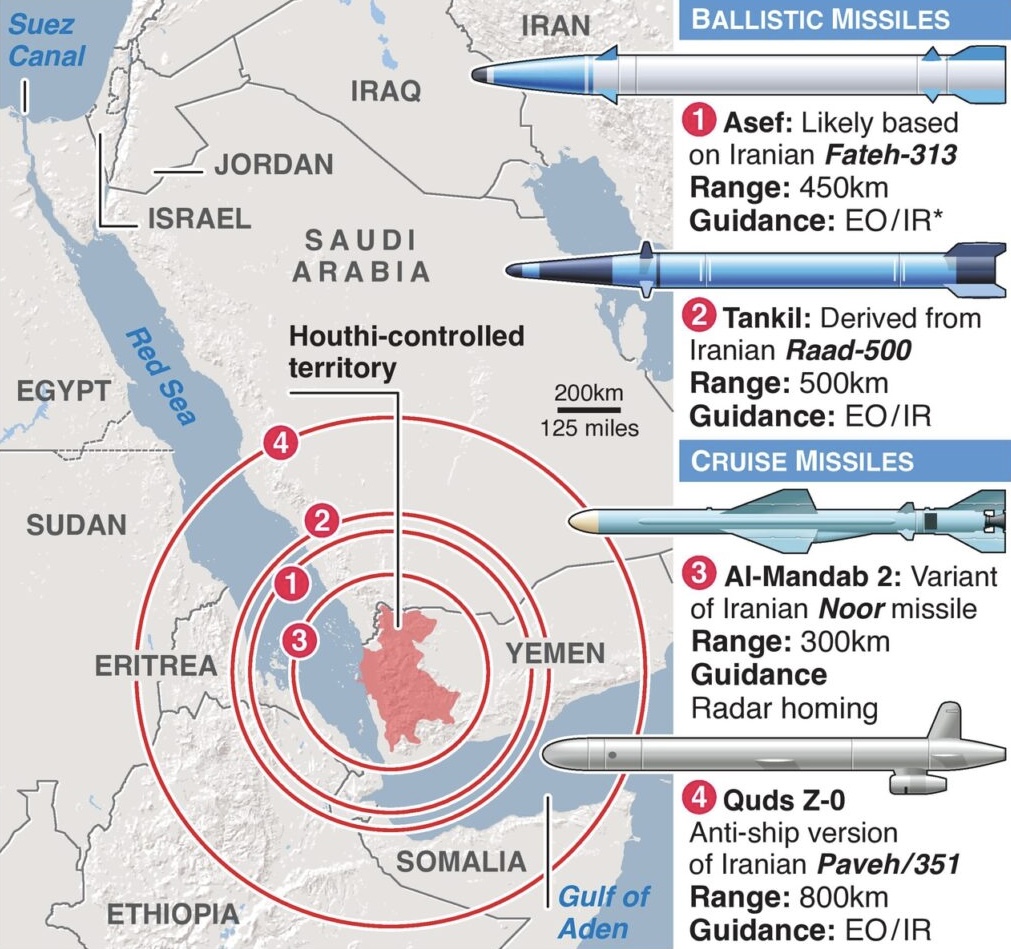
Strategic and Supply-Constrained. The Houthis entered the Iran war as the most physically preserved Axis component after Operation Rough Rider (March-May 2025) struck over 1,000 targets in Yemen. Killing their missile and drone unit commander Zakaria Abdullah Yahya Hajar. Houthi officials claim that the group's weapons stockpile is "still running low after its attacks during the Israel-Hamas war" and that the Iran war "further impeded the flow of weapons" because Iran needed its remaining stockpile for its own war effort. A separate Houthi official claimed retention of a "large stockpile of drones". The Houthis entered the Iranian conflict on 28 March with limited ballistic missile strikes on Israel (coordinated with Iran and Hezbollah). They did not reopen Red Sea shipping attacks, the operation most damaging to the global economy but also the most supply intensive.
Post-Ceasefire Posture and Escalation Threshold. Post-ceasefire, leader Abdul-Malik al-Houthi declared the outcome a "great victory for the Axis of Resistance" and explicitly stated the group will return to war if the ceasefire fails and US-Israeli aggression resumes. The Houthis' most likely escalation trajectory if the ceasefire collapses is the resumption of Red Sea shipping attacks, adding a second maritime chokepoint to Hormuz. This is their highest-impact, most practiced operation, and it carries lower targeting risk than ballistic missile strikes on Israel. A supply replenishment window if Iranian arms exports resume post-settlement, would materially increase their capacity to sustain a prolonged Red Sea campaign. The Houthis have attacked 178 vessels during prior campaigns, sinking four ships and killing nine sailors. Red Sea commercial traffic has not recovered to pre-2023 levels even after the May 2025 US-Houthi ceasefire.
Gaza and Secondary Proxies
Hamas. Institutionally Intact, Disarmament Spoiler Risk. Hamas controls approximately half the Gaza Strip and has not disarmed under the Trump 20-point plan. The analytically significant near term concern is not Hamas's battlefield capability but its bureaucratic strategy. Hamas commanders are embedding in civilian roles within the NCAG governance structure, securing government files, and leveraging Israeli non-compliance on aid access to justify its own non-compliance on disarmament. Palestinian Islamic Jihad (PIJ), a separate Iranian backed Gaza faction with fewer institutional incentives to cooperate, is assessed as a likely disarmament spoiler regardless of any Hamas deal. Netanyahu's 60-day Hamas disarmament ultimatum has passed expiry; the IDF is actively preparing a ground offensive contingency.
Liwa Fatemiyoun, Liwa Zainabiyoun, and Peripheral Proxies. Following the December 2024 collapse of the Assad regime, both Afghan Liwa Fatemiyoun and Pakistani Liwa Zainabiyoun evacuated Syria and relocated to Iraq under Quds Force command. Both pledged support for Iran following Operation Epic Fury and participated in Qom mourning ceremonies alongside KH and PMF representatives. They represent an operational manpower reserve that is IRGC trained and ideologically committed. Asaib Ahl al-Haq and Harakat al-Nujaba remain active IRI components with significant Iraqi parliamentary representation and state-funded PMF brigades. Nujaba publicly committed to the Iran war on 28 February and was struck in multiple US airstrikes. Both have stated commitment to a "prolonged war of attrition" against US presence in Iraq regardless of ceasefire status.

Did you know our analysts are graduates of the Intelligence Analyst Certification Course? Hit the link below to check it out and join the waitlist for the next cohort!
Why This Matters
The survival of the IRGC proxy network largely intact across four theaters (Iraq, Lebanon, Yemen, and Gaza). The United States and Israel likely degraded Iran's conventional military infrastructure, eliminated senior leadership, and imposed severe economic pressure. They did not alter the regional balance of influence that Iran spent four decades constructing through these networks. Hezbollah is assessed as likely to remain the dominant military force in Lebanon regardless of what any government in Beirut declares in the near to medium term. The Houthis are assessed as highly likely to retain de facto control of Yemen's most populated regions and a credible ability to hold the world's most critical shipping lane at risk on short notice.
Kataib Hezbollah and the IRI umbrella are assessed as unlikely to be dislodged from their institutional position within the Iraqi state within any foreseeable policy timeframe. Hamas is assessed as likely to convert the current ceasefire into a durable governance foothold in Gaza absent a credible enforcement mechanism. Any diplomatic settlement that does not include binding, verifiable constraints on Iranian proxy support is assessed as likely to produce a regional order in which Iran's strategic reach (its ability to threaten Israel, interdict global commerce, destabilize US partners, and hold US personnel at risk) is functionally restored within 24-36 months.
The proxy network is assessed as the primary mechanism through which Iran projects power, deters adversaries, and maintains regional relevance absent a conventional military capable of doing so. Strikes that degrade the mechanism without addressing the strategic logic that produced it are assessed as likely to generate the same outcome observed after Soleimani's death in 2020: a period of disruption followed by accelerated reconstitution.
If you made it this far - we want to hear from you! What are you watching? What questions do you have for our team. Let us know!


Responses