
Regional Security Analysis | 6 NOVEMBER 2025
Written by Analyst T.J. Garrity
Bottom Line Up Front
-
It is highly likely that targeted sea-based strikes will occur.
-
It is a realistic possibility that limited land-based special operations strikes will also be authorized.
-
It is highly unlikely that significant conventional ground forces will enter Venezuela this month.
-
It is almost certain the U.S. will activate and expand its regional footprint. This includes reopening or retrofitting bases in the Dominican Republic and Honduras (Soto Cano), expanding operations at Guantanamo Bay, and establishing up to two maintenance centers in Colombia.
-
It is almost certain the U.S. will execute a "threefold pressure" strategy:
-
Strengthen partnerships with friendly nations (disaster relief, infrastructure, security training).
-
Apply economic, political, and covert pressure on unfriendly nations.
-
Utilize regional unrest to solidify support.
-
Key areas to watch are Venezuela, Trinidad and Tobago, Argentina, Panama, Cuba, Brazil, Guatemala, Honduras, and El Salvador.
The Catalyst: Renewed "Maximum Pressure"
Tensions, which have been simmering since 1998, escalated sharply in August 2025. The U.S. administration revived its "Maximum Pressure" campaign, citing drug trafficking as the primary justification.
This campaign was built on establishing a link between the Cartel de los Soles (a term for the network of corrupt Venezuelan officials) and the transnational gang Tren de Aragua. President Trump subsequently designated both entities as Foreign Terrorist Organizations (FTOs), authorized the U.S. military to use force, and re-affirmed a $15 million bounty for information leading to Nicolás Maduro's capture.
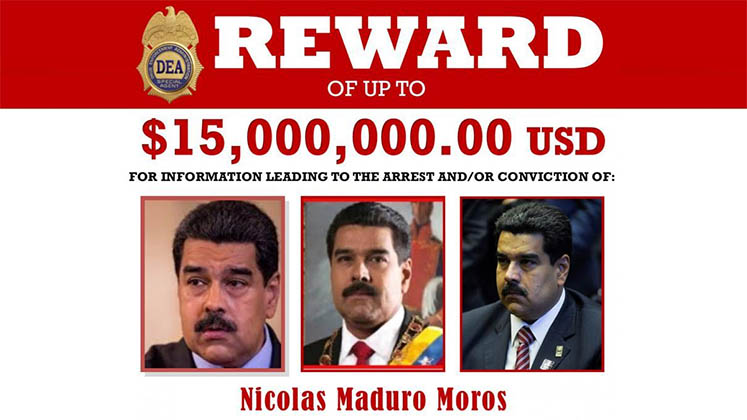
This political action was immediately followed by a significant military deployment: a U.S. Naval fleet, detailed below, was dispatched to waters near Venezuela.
U.S. Military Posture
As at 04 Nov 25, current U.S. forces in theatre represent a formidable strike capability.
-
Carrier Strike Group (CSG): Centered on the
-
USS Gerald R. Ford (Aircraft Carrier)
-
-
Amphibious Ready Group (ARG): Centered on the
-
USS Iwo Jima (Amphibious Assault Ship)
-
-
Support & Escort:
-
USS San Antonio & USS Fort Lauderdale (Amphibious Transport Docks)
-
USS Jason Dunham, USS Gravely, & USS Stockdale (Guided-Missile Destroyers)
-
USS Lake Erie (Guided-Missile Cruiser)
-
USS Wichita (Littoral Combat Ship)
-
USS Newport News (Nuclear Fast Attack Submarine)
-
Comment: This combined CSG and ARG can field a comprehensive range of combat missions, including sustained air campaigns from the Ford and Marine insertion from the Iwo Jima. The Tomahawk cruise missiles aboard the destroyers and cruiser provide significant stand-off strike options that are well out of reach of Venezuela's aging counter-munitions.
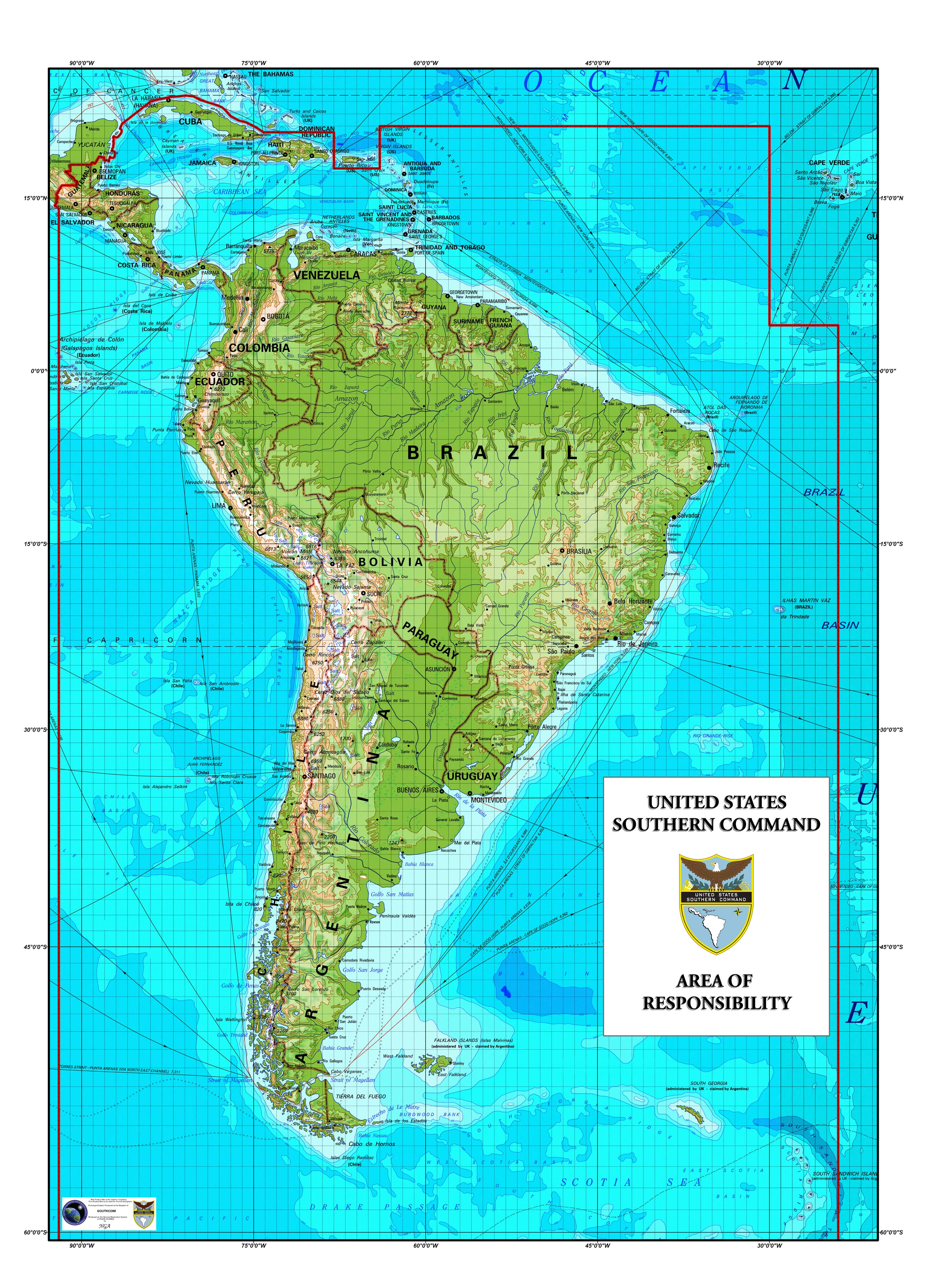
However, there is currently neither the political support nor sufficient U.S. military mass in theatre to support a large-scale ground invasion or provide the necessary security to sustain a functional government post-conflict.
Want to know how to understand and monitor an evolving flashpoint? The Military Intelligence Course is currently in development and will give you the tools needed to stay ahead of any conflict. Express interest below and be sent an information included our draft syllabus.
👉🏼Express your interest here 👈🏼
Analysis of Maduro's Position
Internal & Political Pressure
The Maduro regime is contending with catastrophic internal failures. The population faces hyperinflation exceeding 200%, severe food shortages, and a collapsing infrastructure, creating the world's largest refugee population.
Maduro remains dependent on Cuban military assets for intelligence and his own personal security. He continues to "coup-proof" the Venezuelan military by decentralizing commands, placing political loyalists in command positions, and using the Military Justice System to punish dissent. This tactic relies on imprisonment, torture, and intimidation of family members, fostering intense paranoia among his own commanders.
Faltering Foreign Support
Maduro’s traditional foreign support has proven unreliable for a conventional conflict.
-
Russia: Heavily preoccupied and depleted by the war in Ukraine, Russia's support is minimal. It has so far only dispatched a single Ilyushin Il-76 transport aircraft. While its cargo is unidentified (capacity: 50 tons or 500 personnel), this is seen as a symbolic gesture, not a strategic one.
-
China: Beijing has not sent significant military exports since a 2023 delivery of dated IFVs, aircraft, and missiles. In September, it sent the "Peace Ark" (Daishan Dao) hospital ship as part of a "humanitarian" effort. Most support remains political and diplomatic.
-
Turkey: Support is, and will likely remain, purely economic, focusing on sanction-evasion schemes (e.g., gold-for-food).
-
Cuba: Remains the only nation providing direct security and intelligence assets to Maduro.
Assessment: Most of Maduro's foreign support is political or economic. No foreign partner is currently able or willing to provide the large-scale military equipment necessary to deter U.S. forces. There is, however, a realistic probability that other state actors will assist with cyber and grey-zone warfare tactics to disrupt U.S. operations.
ENDS
Responses