
The point
Most intelligence work in New Zealand happens outside the agencies, in ordinary organisations, and its product is a better decision for the public. Trust in that work is earned by how it is done. This edition sets out what the public gets from intelligence work, what practitioners owe the public in return, and what leaders outside the security world can take from the discipline.
The problem, plainly
Last week at the NZIIP conference in Wellington, a working group asked how intelligence can better support social trust in New Zealand. It is a fair question. Most people meet the word intelligence through spy films, leak stories and scandal. Ask them who does intelligence work and they will name an agency. Ask them what it produces and they will say surveillance.
The daily reality is different. Analysts sit in emergency operations centres directing rescue effort through a cyclone. They map scam networks so banks can warn customers before the money moves. They watch the border for pests and diseases that would wipe out an exporter's season. They study harm data so a safety regulator inspects the right sites before someone is killed at work. They sit in councils, hospitals, insurers, utilities and iwi organisations, and the thing they hand over is a better decision for the people those organisations serve.
The gap between the public picture and the daily reality is the trust problem. Nobody extends trust to work they cannot see.
Where it comes from
New Zealand has been closing that gap deliberately since 2020. The Royal Commission of Inquiry into the Christchurch attack reported in December that year with 44 recommendations, and the Government accepted all of them. The Commission found the agencies had told the public too little about the threats they were working against, and the Government apologised for the disproportionate scrutiny the Muslim community had carried. One recommendation asked for an annual public account of the threat picture.
That recommendation became practice. Since August 2023 the NZSIS has published New Zealand's Security Threat Environment, an unclassified annual assessment of violent extremism, foreign interference and espionage, written for the public. The same year the Government published the country's first National Security Strategy, and it was built on public engagement: a national survey in 2022, followed by open consultation that asked how to improve public trust and confidence in the agencies themselves.
The direction of all of this is one idea, and the mining and dairy industries named it first: social licence. An activity that affects the public runs on public consent, and consent has to be earned and re-earned. Intelligence work is no different.
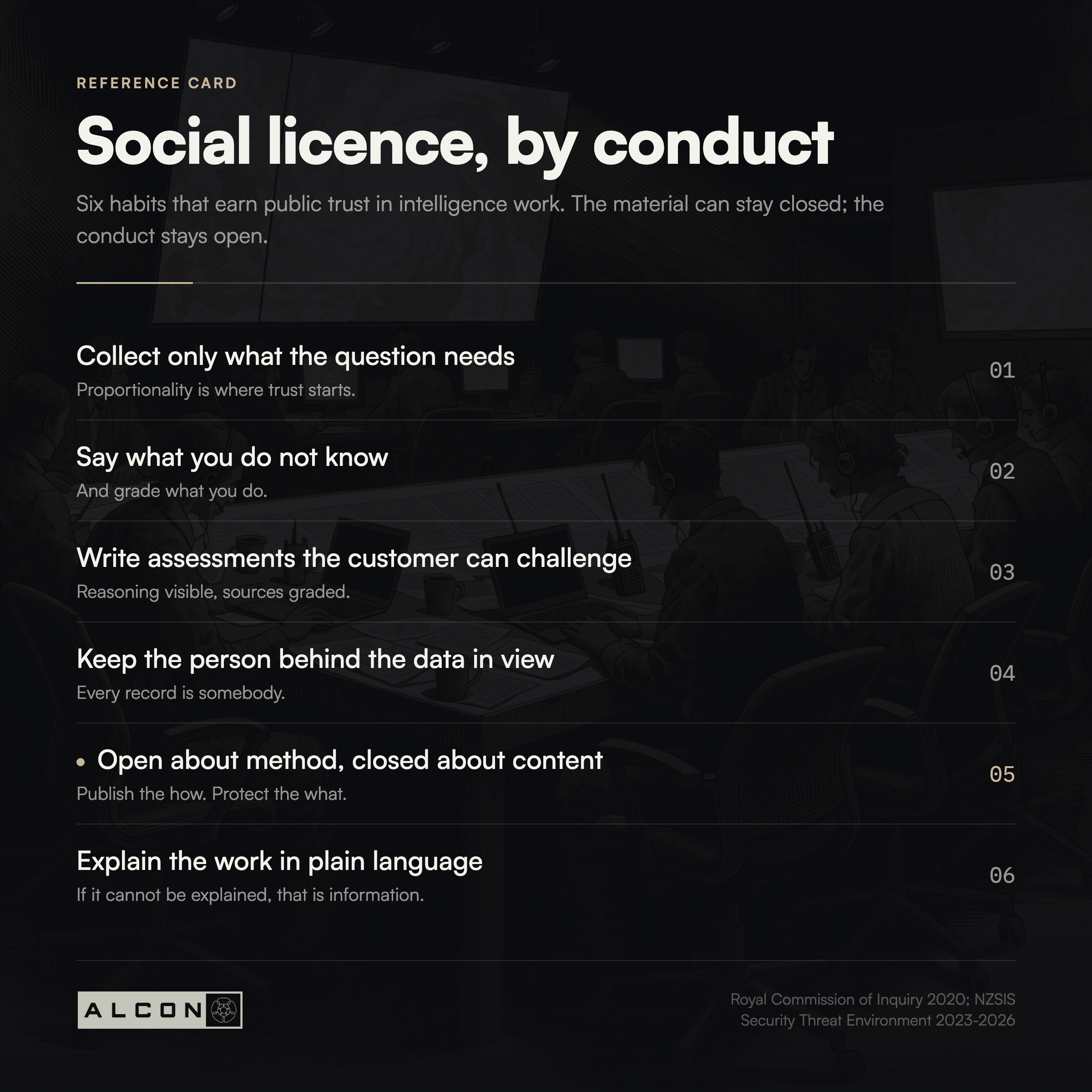
Save this one. Six habits that earn public trust in intelligence work.
The fix
For the public: judge the work by what you can now see. The annual threat reports are written for you. Emergency management, biosecurity and financial crime prevention all run on intelligence method, and you meet their results as a warning that arrived in time, a pest that stayed out, a scam that was stopped.
For practitioners: your conduct is the licence. Collect only what the question needs. Say what you do not know, and grade what you do. Write assessments a customer can challenge, with the reasoning visible. Keep the person behind the data in view. Every honest, proportionate product builds trust. Every overreach takes some away, and it takes it from all of us.
For leaders: intelligence is a decision-support discipline, and it transfers. A council weighing a flood-protection budget, an iwi organisation managing land and people, a firm choosing which market risk to work first: all of them can run direction, collection, analysis and delivery. The method is teachable, and it does its best work in the open.
The trade-off
Some material must stay closed, because sources are people and methods stop working once described. The honest position is openness about how the work is done even where the content stays protected: publish the method, the safeguards and the track record, and protect the material. Secrecy about content is defensible. Secrecy about conduct is what loses trust.
Do this next
Explain your intelligence work, in plain language, to someone outside it this week. If you cannot explain it in a way an ordinary person would accept, treat that as information.
This is the kind of tradecraft the Intelligence Analyst Certification Course teaches, step by step. If these editions are useful to you, the course is the next step.


Responses