
The point
The most common error in intelligence is assuming the other side shares your logic. Red Hat Analysis is the fix. You model the adversary from the inside, then rank what they are most likely to do by their reasoning, not yours.
The problem, plainly
Mirror-imaging is judging another actor by your own values and your own idea of what counts as rational. It is quiet, because the evidence still arrives. It just gets fitted to the assumption instead of tested against it. October 2023 is the case now taught in courses. Reporting indicates Israeli intelligence had obtained a detailed Hamas assault plan more than a year before, and had assessed it as unrealistic. The prevailing view held that Hamas was deterred and wanted economic relief, so a plan that did not fit was treated as aspirational. When Hamas was seen training for exactly that kind of assault, it was treated as theoretical.
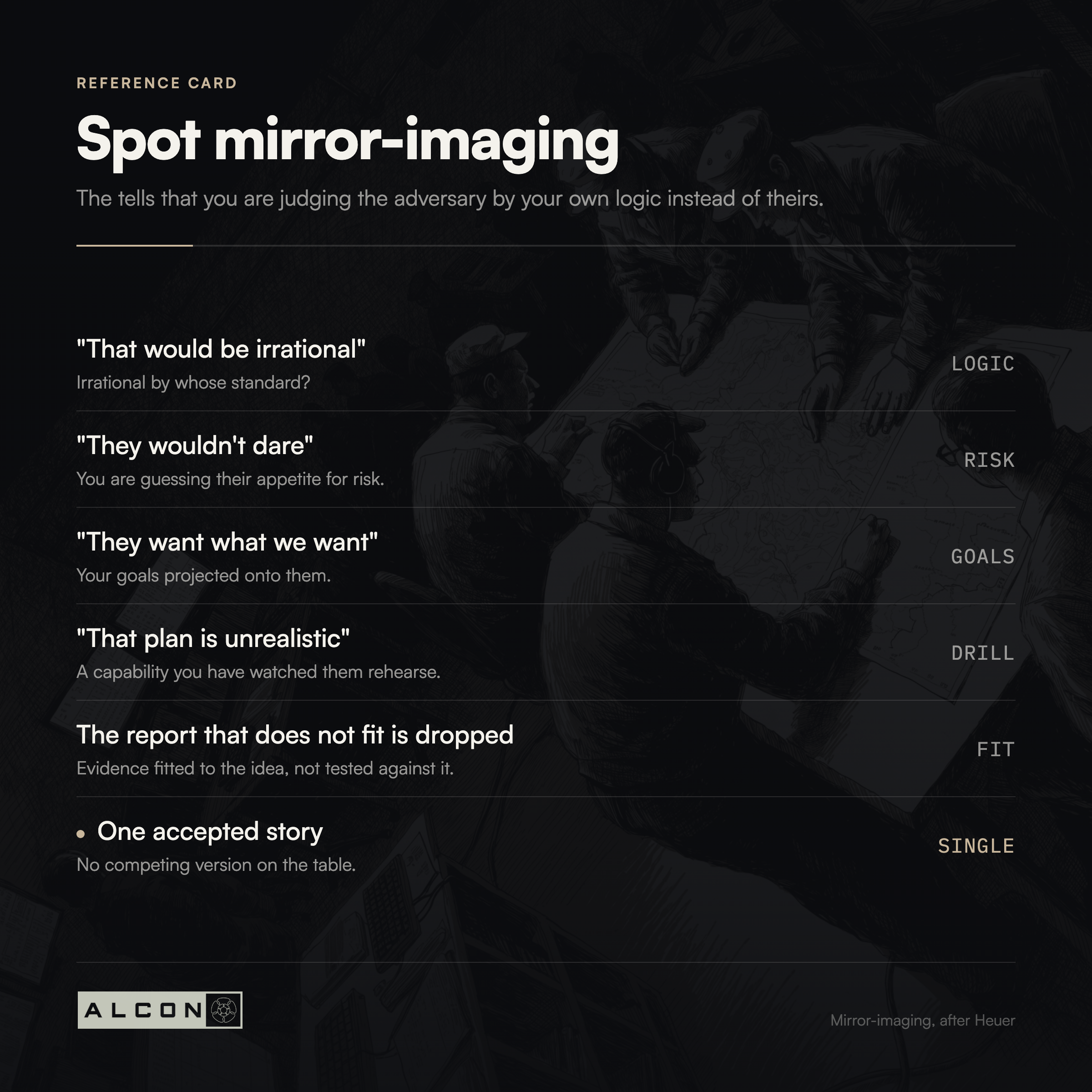
The tells you are mirror-imaging.
Where it comes from
The failure is old enough to have a name. The inquiry into the 1973 Yom Kippur surprise called it the conception: a fixed idea about the adversary's intent that reshaped how every new report was understood. Fifty years later the same word was used again. In both cases the raw evidence was on the desk. The assumption about what the other side would choose is what failed.
Richards Heuer, who spent a career on the psychology of analysis, put mirror-imaging at the top of the list of traps, because it is invisible from the inside. You do not feel yourself assuming the adversary is reasonable by your standards. You just quietly discard the reports that say otherwise.
The fix
Red Hat Analysis makes the perspective change deliberate. You build the adversary's persona: their goals, their constraints, their culture, and their decision style. You then describe how they see the situation and your own moves, in their words. Finally you rank their likely courses of action, most likely first, each with the reason they would choose it.
The discipline that makes it work is writing in the first person, as them. "I would" forces you out of your own frame in a way "they might" never does. Done properly, it surfaces the option that mirror-imaging quietly rules out, and it turns a vague worry into a ranked list you can watch for.
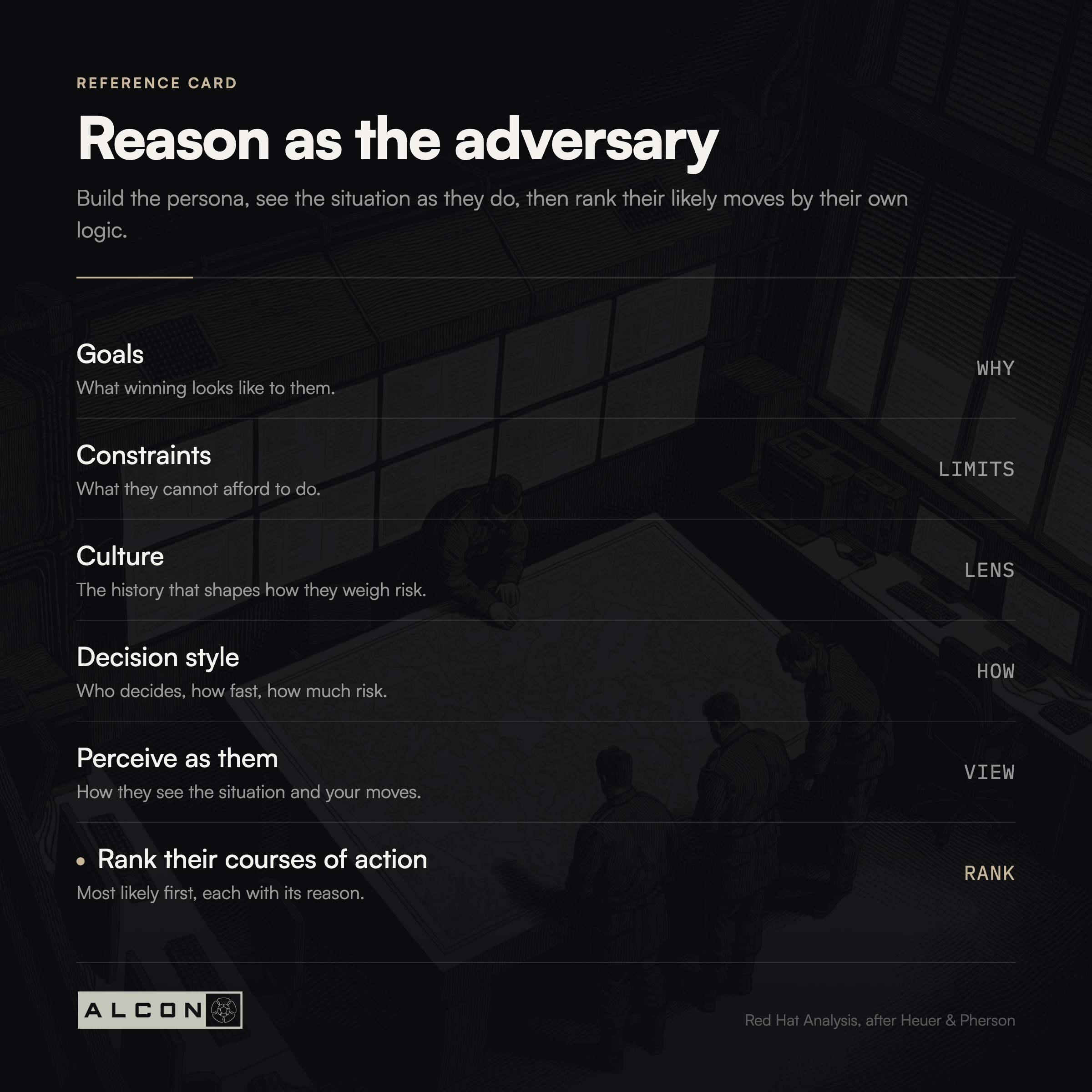
Save this one. The Red Hat sequence, start to finish.
The trade-off
Red Hat is only as good as your knowledge of the adversary. Guess at their culture and their history and you have not escaped mirror-imaging, you have only put a costume on it. The technique also produces a ranked set of possibilities to test and watch, not a prediction. And even a disciplined Red Hat can be overridden. Analysts have argued that in 2023 bias was not the whole story: warning fatigue and political attention elsewhere also played a part, so the technique needs a culture that will act on what it surfaces. Used well, it lowers the risk of surprise. It does not remove it.
Do this next
Take a live problem where the other side has a choice to make. Write one page as your adversary, in the first person, and rank what you would do in their position. If your top course of action is not the one your own side is planning around, you have found something worth checking this week.
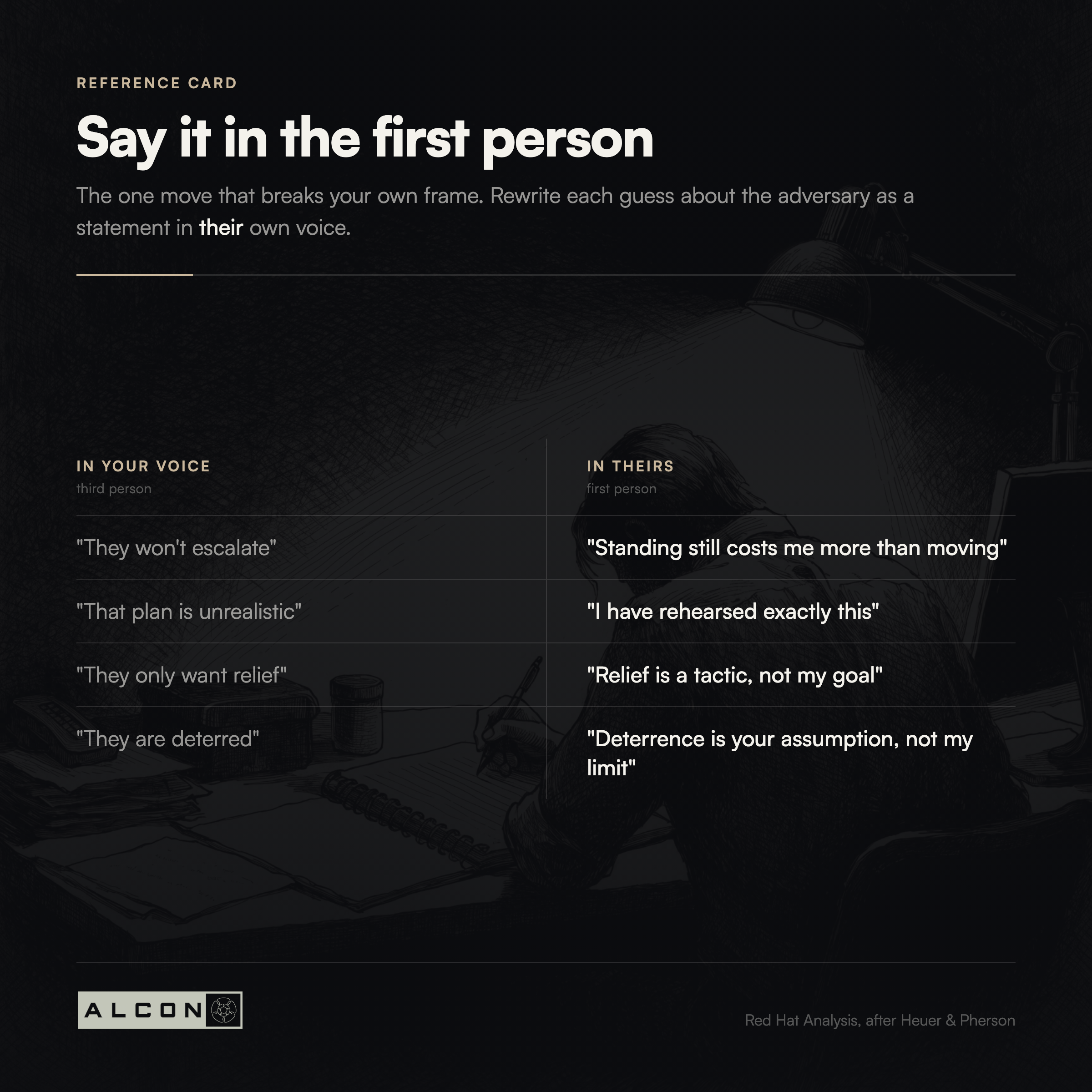
Rewrite every guess in their own voice.

This is the kind of tradecraft the Intelligence Analyst Certification Course teaches, step by step. If these editions are useful to you, the course is the next step.



Responses