
BLUF
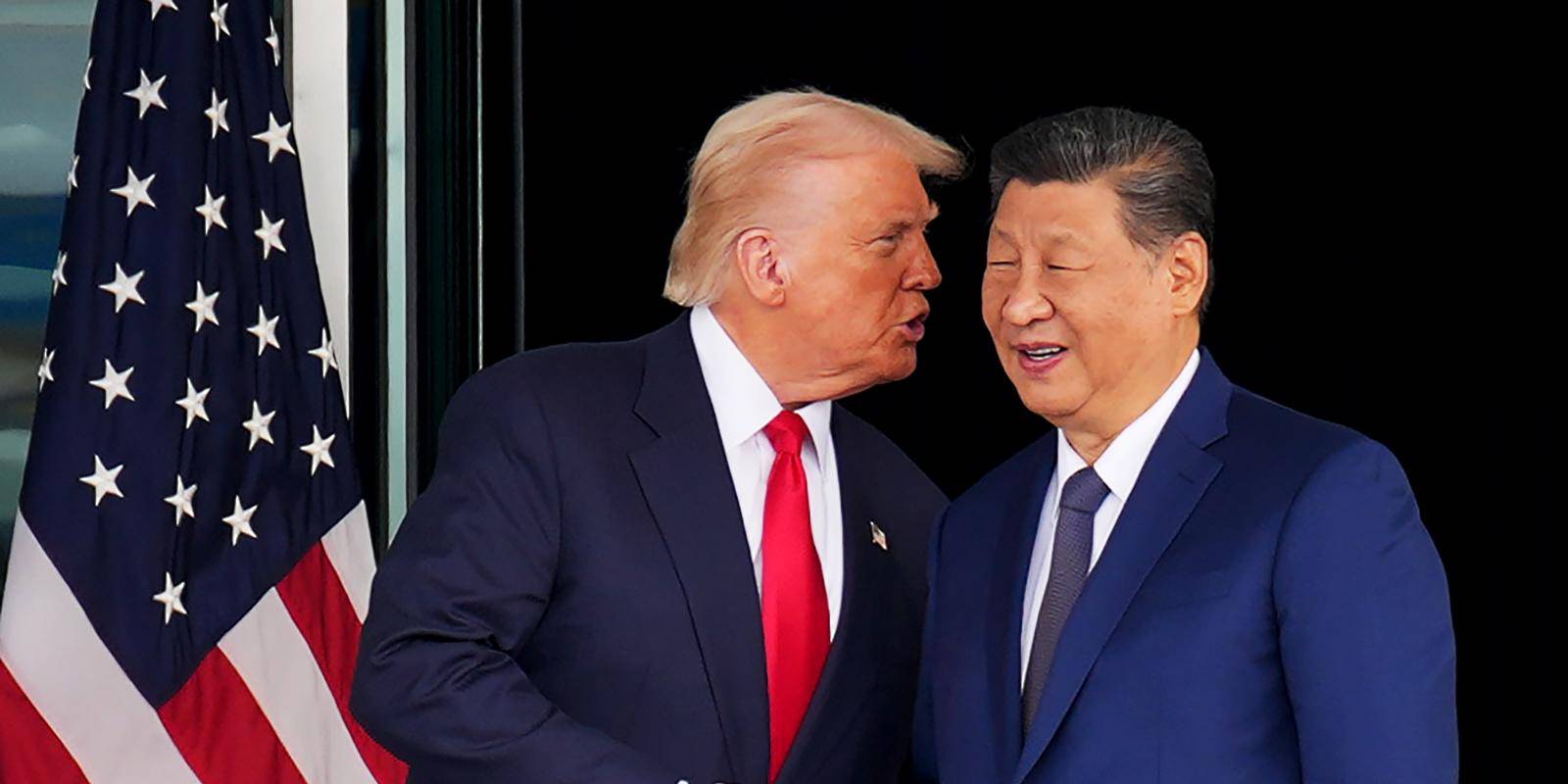
The May 14–15 Trump–Xi summit in Beijing produced a carefully managed stabilization, not a breakthrough. Trump arrived disarmed of his primary negotiating tool, tariff authority, which had been gutted by back-to-back court rulings. Washington advertised mild transactional wins, including a Boeing order, agricultural commitments, and vague assurances on rare earths and Iran. Beijing held the structural advantage and leveraged it to secure slightly more durable prizes. Its primary takeaways were rhetorical, with Trump adopting the G-2 framing and weakening the language of his stance on Taiwan.
The only firm institutional deliverable was a mutual agreement to keep talking. Whether any of the summit's claimed commitments materialize will not be known until Xi's planned September state visit to Washington.
Situation Overview
The May 14–15, 2026, Beijing summit was the first U.S. presidential visit to China in nearly a decade, with Trump having made the previous state visit during his first term in November 2017. The U.S. and China once had almost 100 dialogue mechanisms covering a wide range of shared interests, but fewer than half a dozen remain active today.
Trump and Xi met face-to-face once before in Trump's second term, on October 30, 2025, in Busan, South Korea, on the sidelines of the APEC summit. Their nearly two-hour discussion was largely prompted by the escalating threat of a severe trade war between the two nations. At that meeting, China agreed to defer rare earth export controls for one year and resume U.S. soybean purchases, in exchange for reduced U.S. tariffs.
Both sides agreed to future dialogue, with the recent Beijing summit originally planned for late March/early April 2026. U.S.–China dialogue between the Busan meeting and the Beijing summit marked a fragile stability characterized more by an absence of friction than any affirmative agenda or deep dialogue addressing the challenges and substantial differences (Taiwan, tech, trade) impeding the relationship. The onset of the U.S.–Iran war in late February 2026 further strained tensions and forced the summit to be rescheduled.
The Beijing summit should not be viewed as a comprehensive fix for the U.S.–China relationship. Both sides arrived with defined limits on what they were willing to concede, and both left having protected those limits. The summit's value lies less in what was agreed upon than in what was avoided. It at least temporarily prevented a further deterioration of the relationship at a moment when both sides were in no position for escalation. That is a modest but meaningful outcome and sets the stage for future talks in September.
Important Caveat
Much of what occurred during the summit was said behind closed doors. With high-stakes diplomacy at this level, the publicly visible record represents only a small portion of what was actually discussed. The one-on-one meeting between Trump and Xi produced no official readout from either side. Both governments, by mutual agreement, chose silence on specific exchanges. Specific details about sensitive topics such as Taiwan's red lines or the precise terms of Iran-related coordination remain unknown. The following assessment is based only upon verified public statements, confirmed reporting, and documented facts.
Background: Trump Arrived Disarmed
Entering Beijing, Trump was largely disarmed. His most powerful tool, the threat of sweeping tariffs, was largely dismantled by U.S. courts in the weeks preceding the summit. This significantly weakened his leverage with Beijing.
February 2026: The U.S. Supreme Court struck down Trump's sweeping IEEPA-based tariffs, ruling that the president had wrongfully invoked emergency economic powers to implement broad import duties.
May 7, 2026: The U.S. Court of International Trade struck down a second round of tariffs just one week before the Beijing summit. These were Trump's replacement 10% global tariffs imposed under a different legal authority.
Trump pledged to pursue tariffs via a third legal avenue (Section 301 of the Trade Act of 1974). However, that pathway was still under investigation at the time of the summit, leaving him without immediate credible tariff escalation power. The administration could also invoke Section 338 of the Tariff Act of 1930 (part of the Smoot-Hawley Act), which allows for tariffs of up to 50 percent on countries that disadvantage U.S. commerce. However, this act has never been used and would also require time to implement, making it a poor tool for threats.
Trump's domestic political standing was at its lowest point of his second term entering the summit, with the Iran war, economic disruption, inflation, and court defeats straining Republican unity. The November 2026 midterms are expected to further reduce party strength and heighten pressure to claim wins without real substance. This further erodes his position of strength as a negotiator.
The Iran war also transferred significant U.S. military and diplomatic capital from the Indo-Pacific to the Middle East. Significant arms and munitions depletion further compounded the issue, weakening American deterrence posture and force projection in the Indo-Pacific at the time of the Beijing summit.
Implications
Bans on tariff use could significantly slow future escalations. Actions will now rely on a narrower set of statutory tools or require political bargaining with Congress. If Washington cannot easily escalate tariffs on its own authority, China now has greater time, leverage, and room to maneuver.
Further, Chinese officials can now argue that American tariff threats are made empty by their own constitutional guardrails. Beijing has criticized the Trump administration for undermining the rules-based international trade system through its imposition of tariffs and unilateral sanctions. U.S. courts finding these tariffs illegal furthers this narrative, adding credibility to Chinese accusations of U.S. economic coercion. China's Ministry of Commerce was quick to make a statement admonishing the Trump administration's tariff policy for violating both international trade rules and U.S. domestic law following the court ruling. While the era of instantaneous tariff retaliation is not over, it is meaningfully constrained.
Enrolments for Cohort 7 are now open for the Intelligence Analyst Certification Course. If you read these reports, you're perfect for our world renowned intelligence training programme. Hit the button below to learn more:
U.S. Strategic Goals
The United States entered the summit with several main objectives. Trump wanted to show domestic constituencies tangible wins ahead of the midterms. He aimed to do this by securing large-scale purchases of American-manufactured and agricultural goods, using the catchphrase "Boeings, beans, beef" to describe the target products.
The U.S. also aimed to gain durable rare-earth supply stability. At a minimum, a formal extension of the October 2025 deferral of Chinese export controls was desired to help reduce Beijing's leverage over American defense and technology supply chains. Obtaining Chinese assistance on Iran, including pressure to reopen the Strait of Hormuz and a pledge not to supply Tehran with military equipment, was another stated priority.
Washington also sought to improve trade between the two nations by establishing formal bilateral trade and investment frameworks capable of resolving commercial frictions outside the political cycle. Whether the summit served to reassure regional allies that U.S. engagement with China would not come at the expense of their security commitments remains contested.
China's Strategic Goals
Beijing aimed to project parity and establish China as an equal great power alongside the United States. This included the use of the G-2 framework and the adoption of the constructive strategic stability framework as the conceptual baseline for the bilateral relationship.
Taiwan remained Beijing's top priority. China sought, at a minimum, rhetorical ambiguity on U.S. arms sales and a public softening of Washington's commitment to the island. More broadly, China sought to gain time to consolidate its strategic space in the Indo-Pacific while U.S. attention and resources remained committed to the Middle East, and before any post-midterm hardening of U.S. policy toward China.
It is also plausible that Beijing used the summit to signal to regional actors, including Taiwan, Japan, and Southeast Asian states, that Washington was prioritizing stability with China over its alliance commitments. This message would not require any formal concession, merely the express recognition of China as the great power in the Indo-Pacific.
Key Topics
Taiwan
Taiwan was identified by China as the summit's defining issue, and U.S. rhetoric supports this claim. Xi warned Trump early in Thursday's session that mishandling Taiwan would put the bilateral relationship into "great jeopardy" and could lead to "clashes and even conflicts."
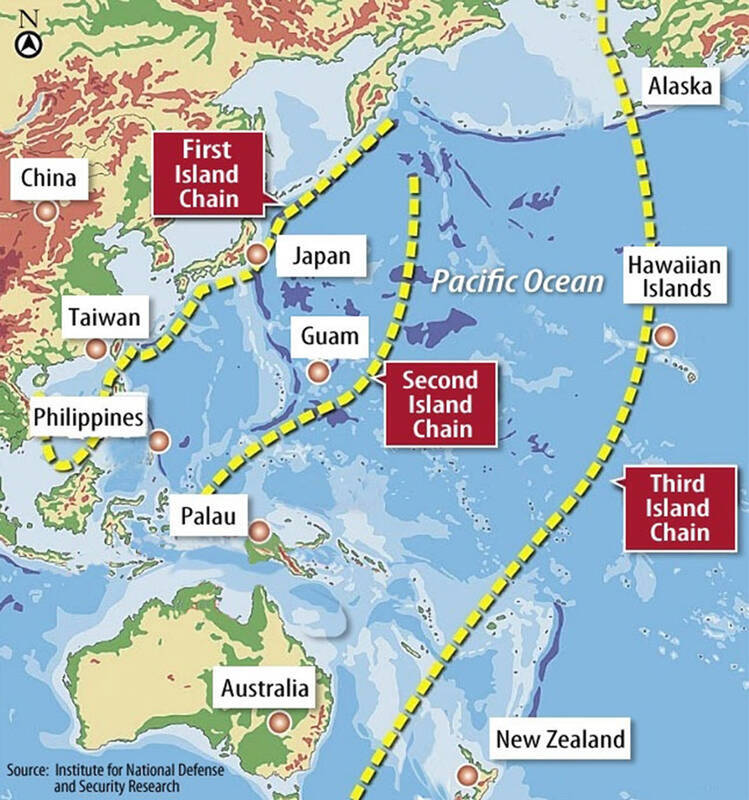
U.S. Secretary of State Rubio pushed back, publicly declaring it would be a "terrible mistake" for China to take Taiwan by force. This represented the firmest public U.S. posture of the summit. Trump took a much softer approach. He initially said that the Chinese leader doesn't want a war over Taiwan and that "nothing's changed" in U.S. policy toward it. At the same time, however, he delayed the pending $14 billion arms sale to Taiwan. Trump claims the weapons are a "very good negotiating chip" that he is "holding in abeyance [dependent] on China."
This delay, while framed as strategic, sends concerning signals to Taiwan and to America's allies in the broader Indo-Pacific. Trump's willingness to pause arms deliveries and decline a public commitment on Taiwan, combined with his "G-2" framing of the relationship, may signal a structural shift toward bilateralism at the expense of Washington's multilateral Indo-Pacific architecture. The fact that Washington chose stability with Beijing over a clear reaffirmation of its commitments marks a potential shift in priorities away from its regional allies.
While it appears likely Taiwan will still receive its arms package, albeit delayed, Trump's weakened support for Taipei marks a victory for China. Japan, South Korea, and Taiwan are likely to perceive this delay as an early indicator of how Trump manages their security concerns when they conflict with his relationship with Xi, eroding trust in America's willingness to honor its defense commitments.
Iran and the Strait of Hormuz
The Iran war loomed over the entire summit. Iran has largely blocked shipping through the Strait of Hormuz since the outbreak of the conflict, disrupting approximately 20% of global oil and LNG flows. A U.S. blockade of the Strait further reduced traffic, specifically any vessels traveling to or from Iranian ports.
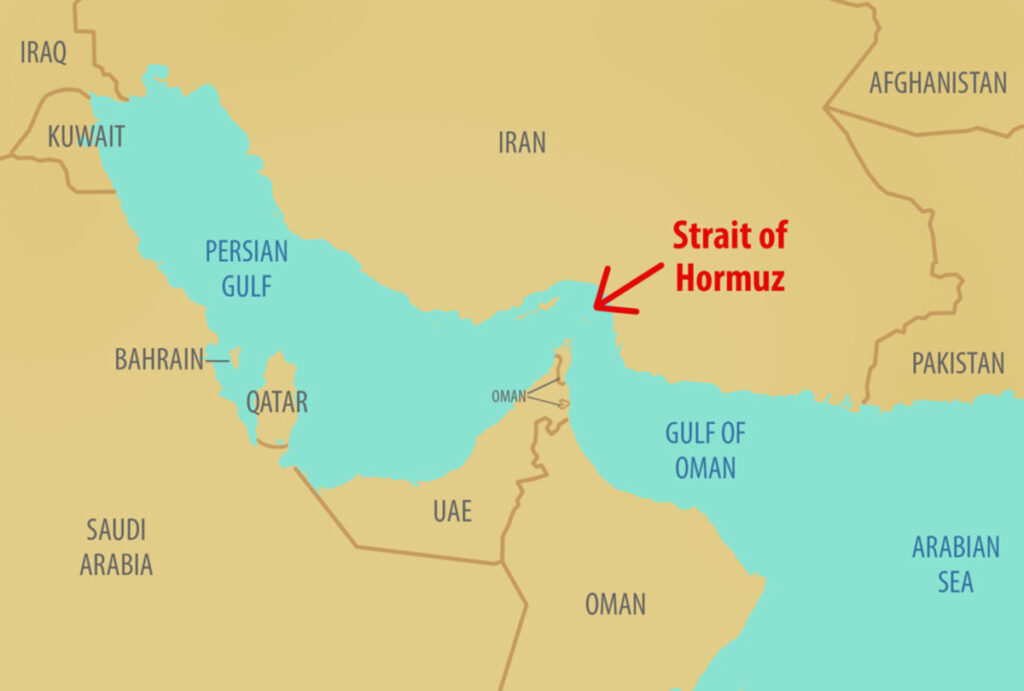
The reopening of Strait transit is a strategic goal of both states, leaving space for cooperation. Trump claims that during their talks, Xi pledged that he "would like to be of help" in negotiating an end to the Iran war and reopening the Strait of Hormuz to oil shipments. Chinese purchases account for about 90% of Iran's exported oil, roughly 12% of China's total imports. This purchasing totals nearly 45% of Iran's government budget, potentially granting Beijing significant influence over Tehran.
However, there are limits to what China can realistically do. The Iranian regime is operating in survival mode and will prioritize its own interests and agenda. Some Chinese vessels have reportedly begun passing through the Strait following an informal understanding of Iranian management protocols during the summit, suggesting some limited operational cooperation.
Trump also stated that both presidents agreed Iran should never have a nuclear weapon and that China reassured it would not provide Iran with military equipment. Both leaders also agreed that no country or organization can be allowed to charge tolls for passage, according to the White House fact sheet.
Significantly, neither Beijing nor the general Chinese media has backed or even mentioned these specific claims. It is possible that these commitments are more a leverage-preservation strategy than a genuine commitment. Without formal commitments, Beijing can easily extend or withdraw its help depending on U.S. concessions on trade or Taiwan.
Rare Earth Materials
The biggest weapon China holds against the U.S. is its near-monopoly of rare earth materials. These are used to make permanent magnets, high-capacity batteries, energy-efficient lighting and displays, and precision industrial and defense equipment, alongside a myriad of other products. While the raw elements are not costly, the processing infrastructure required is extremely expensive. As of 2024, China produced 60 percent of the world's rare earths and processes nearly 90 percent of the global supply. It uses a licensing system to control distribution globally, making it a potent economic weapon that it has already leveraged in response to Trump's aggressive tariff policies.
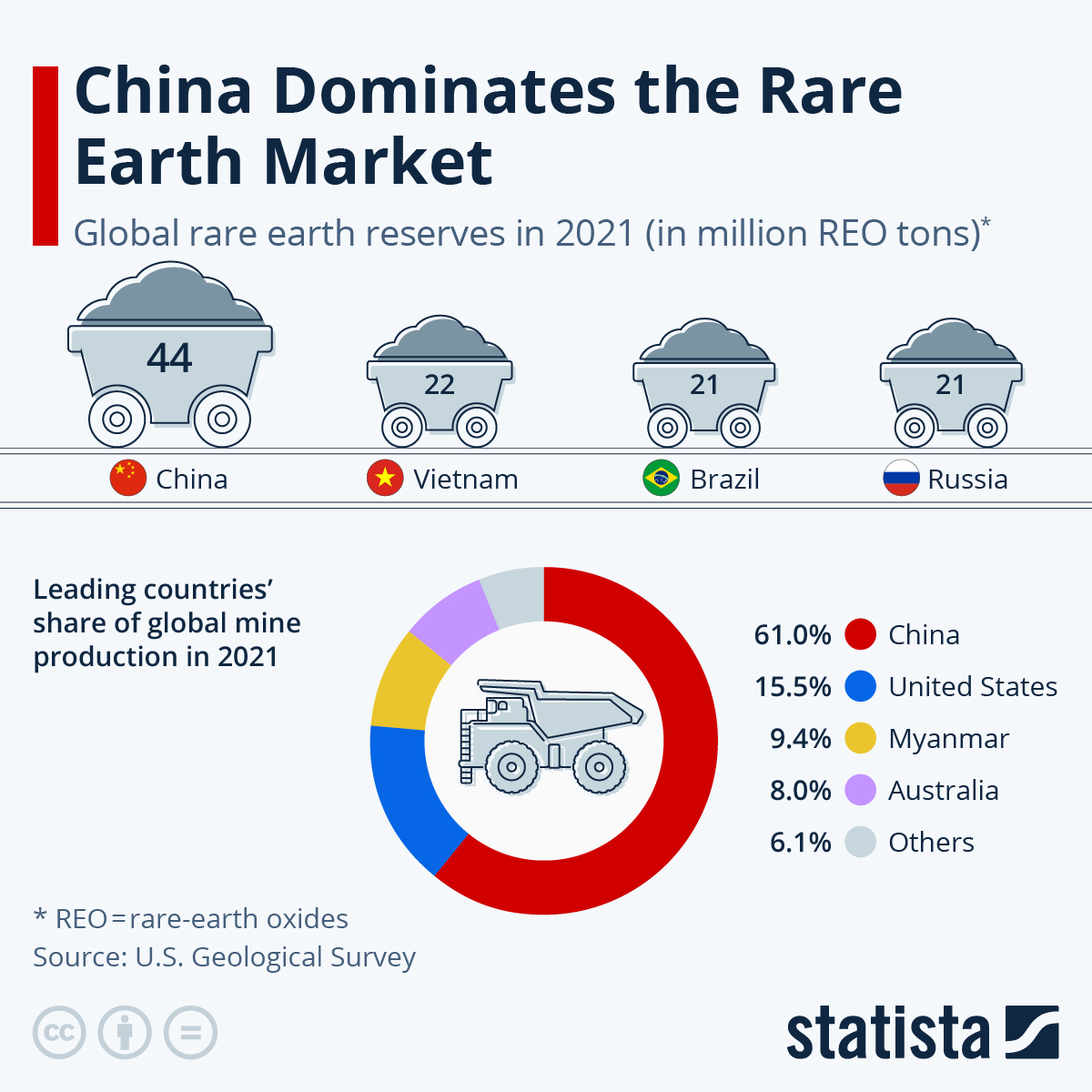
In the 2025 Busan summit, China had already agreed to defer export controls to the U.S. by one year. The May summit appears to have extended or elaborated on this understanding, though no formal timeline or enforcement mechanism was confirmed publicly. The White House readout stated China will address U.S. concerns regarding supply chain shortages related to rare earths and other critical minerals, as well as concerns regarding prohibitions or restrictions on the sale of rare earth production and processing equipment and technologies. Again, Beijing has made no mention of rare earth concessions.
Significant efforts have been made to reduce dependency on Chinese processing through alternative supply efforts globally, including stockpiling, recycling programs, and partner-country investments in processing capacity. For example, the Appalachian region is estimated to contain 2.3 million metric tons of economically recoverable lithium, enough to replace an estimated 328 years of U.S. imports. While the processing infrastructure needed to make such alternatives viable at scale is still being built, China's monopoly is weakening. It is unlikely to be upended in the coming months, but in the coming years China will see a disruption in its hold on the market. The faster the U.S. is able to diversify its sourcing, the weaker Beijing's leverage becomes.
Artificial Intelligence
AI was discussed during the summit, though specific outcomes were not publicly shared. Both sides acknowledged AI as a domain requiring some level of bilateral engagement, given shared risk exposure to adversarial use by non-state actors. No formal AI governance agreement, guardrails framework, or joint working group was publicly announced, consistent with the summit's broader pattern of establishing communication channels rather than substantive commitments.
However, the threat of enhanced AI-enabled capabilities for criminal networks, terrorist groups, and lone actors creates a limited area of shared concern that could serve as a foundation for future dialogue. It is possible that AI governance may emerge as a zone of limited U.S.–China cooperation. Both states face existential risk from ungoverned AI proliferation that transcends their bilateral competition. This creates the potential for an arms-control-style framework analogous to the nuclear risk-reduction mechanisms of the Cold War.
Victories and Failures
The summit's concrete deliverables were modest. The two sides established a bilateral Board of Trade and a Board of Investment, with USTR Greer describing an initial focus on approximately $30 billion in potential tariff reductions. Cooperation marks significant growth from the open trade war of 2025, but the distance remaining is still significant. A mutual agreement to keep talking is not the same as progress. Both bodies are aspirational structures with no track record, no published metrics, and no enforcement mechanism.
China's record on similar frameworks warrants skepticism. The 2020 Phase 1 trade deal collapsed in spectacular fashion. China had committed to purchasing $200 billion more in U.S. goods over two years and was never on pace to meet that target, with the economic damage of COVID only partly to blame. In the end, China purchased only 58 percent of the U.S. exports it had committed to buy.
Trump's record is not much better. The Board of Peace for Gaza has failed to produce meaningful results and severely undersold its promises. The peace plan called for immediate full aid, no interference with aid, and the immediate rehabilitation of infrastructure. Recent reporting describes how, by all metrics, this has not happened. Whether the new Boards produce substantive outcomes will depend on whether both the U.S. and China choose to engage in good faith. While far from impossible, meaningful cooperation appears unlikely until after the next summit in September.
U.S. Successes (based on White House claims; not all confirmed by China)
Boeing order. Landed a confirmed 200-jet Boeing order from China, providing a visible manufacturing win for domestic audiences. While notably below the 500-jet market expectation, the order marks the resumption of Boeing purchases from China after a years-long drought.
China's readout: corroborated.
Agricultural purchases. Obtained a formal $17 billion annual agricultural purchase commitment through 2028. Builds on the Busan agreement and provides a multi-year framework for soybean, beef, and other commodity producers.
China's readout: agreed to improve market access for U.S. agricultural products, but did not specify a purchase amount.
Beef and poultry. Secured a Chinese commitment to renew expired listings of more than 400 U.S. beef plants, lift all suspensions on American beef facilities, and resume imports of U.S. poultry.
China's readout: agreed to resume U.S. beef and poultry licenses, though the quantities to be renewed remained unspecified.
Iran assurances. Received a verbal Chinese assurance that Iran should not acquire nuclear weapons and that China would not supply Iran with military equipment. This provided a boost for Trump's diplomatic narrative, even if China's readout was less specific.
September state visit. Confirmed: Xi will conduct a state visit to Washington in September 2026. An impending visit will help maintain the summit's momentum and create a near-term accountability checkpoint. Having the next summit in the States will give American negotiators the geographical advantage.
China's Successes
China sought less tangible objectives, instead seeking more holistic deliverables. It was willing to absorb some commercial concessions in exchange for time, predictability, and recognition.
Beijing achieved its core PR objective, securing equal-power treatment in the bilateral relationship. Trump's public use of the "G-2" framing, describing the summit as a meeting of "the two great countries," was precisely the formulation China had long sought to institutionalize. China also secured U.S. acceptance of the "constructive strategic stability" framework as the conceptual baseline for the relationship, embedding Beijing's preferred doctrinal language into the summit's official characterization.
Beijing achieved significant ambiguity on Taiwan. Trump did not commit to arms sales and paused delivery of the December 2025 arms package. This hesitancy was a major victory for China, which framed Trump's hesitations as U.S. acknowledgment of Chinese concerns. The summit also achieved partial pressure relief for China, at least until the planned September state visit. Beijing secured a de facto pause in U.S. escalatory pressure, buying time to manage domestic economic challenges and the disruption caused by the Iran war.
U.S. Failures
Trump's framing of the summit as a series of personal wins, such as "fantastic" trade deals and "great" relationships, may have signaled to Beijing that domestic political optics are a higher priority for the current administration than substantive deliverables. If true, Beijing can and will continue to appease Washington with symbolic gestures while it consolidates real strategic gains.
China places significant value on the privacy of closed-door diplomacy, and its post-summit conduct reflects this directly. Beijing's official readout was broad and lacked specific figures, confirming only what served its narrative and omitting the rest. This creates a structural problem for Trump, whose instinct is to leave every meeting announcing wins. The Chinese readout declined to confirm several of his most significant claimed victories, including those on rare earths, Iran, and Taiwan, which can now be denied, deferred, or quietly shelved, with Trump's credibility serving as the primary obstacle to any U.S. effort to hold China accountable.
Some of Trump's claims have already fallen short. The Taiwan outcome represents a rhetorical retreat at a strategically significant moment; while Rubio held a firm public line, Trump's pause on arms deliveries and refusal to make a clear public commitment undercut U.S. credibility with regional allies. Boeing's 200-jet deal fell far short of the 500 predicted by markets, neither Boeing nor China's aviation authorities confirmed the deal in official statements, and Boeing shares fell 4% following the announcement. The tech and business delegation left without commercial breakthroughs on investment, market access, or technology licensing. The summit produced no binding agreements and no enforcement mechanisms for any announced commitment.
China's Failures
While China's vague language helps mask areas of little success, key failures remain apparent. China failed to obtain access to the jet engines and semiconductor technologies it sought from the U.S. delegation, its most pressing commercial objectives, which were not addressed on either readout. Xi's Iran position produced limited visible results; while real, China's leverage over Tehran is constrained, as the national-survival element of the war prevents Iran from easily succumbing to pressure.
Beijing was also unable to secure formal U.S. concessions on Taiwan. Despite significant diplomatic pressure, the U.S. did not abandon its one-China policy commitments, did not cancel the December 2025 arms package, and Rubio and other non-Trump decision-makers maintained a strong public stance throughout. Finally, the bilateral "G-2" framing may carry unintended costs for China: by elevating the rivalry to a superpower competition, Beijing has potentially legitimized American demands for reciprocity and structural reform of the trade imbalance. Like most agreements from this summit, the "constructive strategic stability" framework lacks durable architecture. If a post-midterm or successor administration reverts to a competitive posture, the "G-2" framing may rapidly dissolve.
Why This Matters
The summit's outcome marks a slight reduction in strategic competition rather than a resolution of structural rivalry. The diverging U.S. and Chinese readouts are not minor inconsistencies. Beijing's deliberate omission of key U.S.-claimed commitments from its official statements preserves maximum deniability and follows a documented historical pattern. Agreements without Chinese written confirmation are better viewed as aspirational than operational. The summit bought both sides time, but it resolved nothing structurally. The underlying tensions on Taiwan, technology, and trade remain intact.
Xi's September state visit will be the first real accountability test. If China has not moved on agricultural purchases, rare earth access, or the Boeing order by then, Trump will face a choice between accepting non-performance or escalating against a newly described partner. This choice, not the summit's ceremonial success, is what will define the relationship going forward.
Indicators to Watch
Boeing. Formal confirmation of the 200-jet order by Chinese aviation authorities and Boeing, including contract signing and delivery timelines.
Agriculture. China's monthly agricultural purchase data for soybeans, beef, and other commodities through the remainder of 2026, to assess whether the $17 billion annual commitment is on pace.
Rare earths. Any formal Chinese announcement on export controls, particularly whether the Busan deferral is officially extended, modified, or quietly allowed to expire.
Iran. Concrete Chinese actions on Iran: whether Beijing exerts actual diplomatic pressure on Tehran to reopen the Strait, or whether Xi's Hormuz commitment proves verbal and unenforceable.
Taiwan, military. PLA military activity around Taiwan in the months following the summit. An uptick in exercises or coercive signaling would indicate Beijing views Trump's Taiwan ambiguity as license to escalate.
Taiwan, arms. White House confirmation of the Taiwan arms sale delivery schedule, or an official pause announcement, helping assess whether Trump's noncommittal framing was a tactical delay or the beginning of a retreat.
September visit. Any joint statement from the September Xi state visit. A tandem announcement versus separate statements will reveal the degree of substantive alignment between the two governments.
Reading analysis like this is exactly what the Intelligence Analyst Certification Course teaches you to produce. Cohort 7 is open now, with just 35 seats, and doors close 11:59 PM EDT on Tuesday 9 June. If you read this far, you would be a perfect fit.


Responses